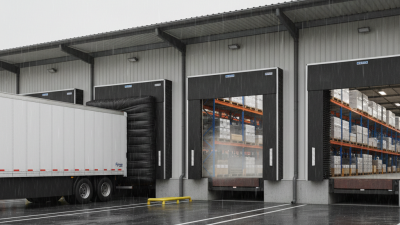
Dock seals are engineered cushions fitted around a warehouse loading door. They compress against a trailer’s rear corners, creating a tighter connection between the building and vehicle. This simple interface helps limit drafts, rain, dust, insects, and unwanted temperature exchange. It also reduces the amount of outdoor air entering busy loading areas.
The U.S. Occupational Safety and Health Administration identifies loading docks as areas requiring secure dockboards, adequate lighting, clear edges, and controlled vehicle movement. These recommendations show why dock seals are more than energy-saving accessories. They support a safer, more controlled transfer zone. The U.S. Department of Energy’s Better Buildings resources also emphasize that uncontrolled air leakage can increase heating and cooling demand, especially around frequently opened doors. The effect varies by building design.
Not every dock seal performs equally. Its effectiveness depends on trailer height, door width, bumper projection, foam density, installation quality, and driver alignment. A damaged side pad may leave a visible gap beside the trailer. Small gaps matter during cold mornings or refrigerated loading operations. The seal is not magic. Poor maintenance can cancel much of its intended value.
Industry data reinforces the importance of this equipment. The U.S. Bureau of Labor Statistics reported 865 fatal work injuries in transportation and warehousing in 2023, highlighting the risks surrounding vehicle and material movement. Meanwhile, the Material Handling Industry’s 2024 Annual Industry Report describes continuing pressure to improve efficiency, labor productivity, and operational visibility. Understanding how dock seals work helps facility managers select suitable designs, inspect them realistically, and connect them with broader safety and energy-control practices.

A dock seal is a set of foam pads installed around a loading-bay door. Most pads measure about 8–12 inches thick. They usually have durable fabric covers. When a trailer reverses into the bay, its rear presses against the side and head pads. The foam compresses and fills the open space around the trailer.
This contact helps reduce drafts, rain entry, dust, and temperature loss. It also creates a darker, more controlled transfer area for workers moving goods. The head pad seals above the trailer roof. Side pads close the gaps beside the doors. Small gaps matter. Cold air can enter quickly through them.
Good performance depends on accurate measurements. The seal should match common trailer heights, widths, and rear-door positions at the site. A rushed measurement can create excessive pressure or leave visible openings. The dock frame must also be strong enough for repeated contact. In daily use, supervisors should inspect torn covers, flattened foam, loose fasteners, and oil damage. These defects may look minor but reduce sealing performance.
Dock seals do not replace a dock leveler or vehicle restraint. They serve a different role. They are not flawless. Unusual trailers, poor alignment, and damaged bumpers can still create gaps. Practical inspections often reveal problems that drawings miss. Replacing worn sections early is usually safer than waiting for the foam to lose its shape completely.
Dock seals close the gap between a truck trailer and a warehouse doorway. Their four core components must work together. The head pad presses against the trailer roof. It limits rain, wind, dust, and conditioned-air loss above the opening. Side pads compress against the trailer walls. They create the main seal while allowing small docking variations.
Wear faces protect the pad surfaces from repeated trailer contact. Common materials include reinforced fabric, coated panels, and replaceable abrasion layers. A torn wear face can expose the foam quickly. It may look minor, but sealing performance can fall fast. Mounting hardware holds each pad to the wall, steel frame, or adjustable support. Strong brackets distribute impact loads instead of concentrating stress at a few bolts.
The U.S. Energy Information Administration’s 2018 Commercial Buildings Energy Consumption Survey reports that space heating and cooling represented about 32% of commercial building energy use. A damaged dock seal cannot control every loss, but it can worsen air exchange around a busy opening. MHI’s 2024 Annual Industry Report also identifies labor pressure and operational efficiency as continuing supply-chain concerns. That makes durable, easy-to-inspect components practical. Field checks should examine compression, loose fasteners, cracked stitching, and uneven trailer contact. Perfect alignment is not always realistic. A seal that survives daily impact may outperform a tighter design that fails early.
What Are Dock Seals and How Do They Work?
A dock seal is a padded barrier around a loading dock opening. It presses against a trailer’s rear edges, helping close gaps between the building and the vehicle. Most trailers are about 8 to 10 feet wide, so the seal must compress evenly across that working area. Side pads contact the trailer walls, while a head pad presses against the upper section. Together, they reduce drafts, rain, dust, and temperature loss during loading.
Compression creates the seal through controlled pressure. When a trailer backs into the dock, its rear corners push into the resilient foam pads. The pads deform, then recover after departure. Proper alignment matters. A trailer parked too far left can compress one side heavily and leave the other side exposed. Dock teams should also check trailer height, pad thickness, and the condition of the fabric covering. Small gaps remain sometimes. That is normal, especially with uneven trailers or worn pads.
Tips: Measure the widest and tallest trailers using the dock. Leave enough pad projection for steady contact without crushing the foam. Inspect seams, mounting points, and damaged surfaces regularly. A simple flashlight check can reveal daylight around the trailer. Do not rely on appearance alone; seasonal temperature changes can alter compression and material flexibility. In practice, the best seal is a balance between firm contact and easy vehicle movement.
Trailer widths in the 8–10 foot range correspond to 96–120 inches. A dock seal forms a weather-resistant barrier when its resilient side and head pads compress against the trailer, filling the gap between the loading dock and the trailer body.
A dock seal supports a controlled connection between a loading dock and a trailer. The sequence begins with careful trailer positioning. The driver reverses slowly toward the dock, guided by painted lines, wheel stops, or a spotter’s signals. The trailer should arrive centered, not merely close enough. A few centimeters can affect pad contact.
As the trailer moves back, the dock seal’s side pads touch the trailer walls. The upper pad or head pad then presses against the trailer’s rear surface. This contact helps reduce gaps, drafts, rain entry, and light leakage around the opening. Even pressure matters. Uneven contact may suggest a crooked trailer, damaged padding, or an incorrect dock height.
Only after the trailer settles should the operator confirm stability and open the dock door. Opening too early can expose workers to moving equipment, shifting freight, or an unstable trailer position. I have seen teams rush this step when delivery schedules become tight. That habit deserves review. A visual check of the seal, restraint system, and trailer floor can prevent a small mistake from becoming a serious incident. The door should rise smoothly, without scraping the trailer or catching on the seal. Door movement can also reveal hidden alignment problems.
What Are Dock Seals and How Do They Work?
A dock seal closes the gap between a loading dock and a trailer. Its side pads and head curtain compress around the trailer body. This creates a controlled transfer zone for people, goods, and air. In field inspections, air leakage is often visible around torn corners or poorly fitted curtains. A smoke pencil can reveal drafts more clearly than a quick visual check. Anemometers and thermal cameras can also identify unstable airflow and cold spots. No dock seal remains perfectly airtight.
Energy loss depends on temperature differences, door opening time, and seal condition. Even a narrow gap can pull cold or heated air outside. That forces climate-control equipment to work harder. Operators should record indoor and outdoor temperatures during similar loading periods. Comparing these readings over several weeks gives more useful evidence than one measurement. The numbers may still be imperfect.
Durability comes from suitable fabric, reinforced stitching, resilient foam, and correct compression. Frequent trailer movement can abrade lower edges and loosen mounting points. Inspectors should check tears, crushed foam, water entry, and distorted frames. A damaged seal may also obstruct visibility or interfere with safe trailer positioning. Safety requirements should cover pedestrian separation, dock plates, vehicle restraints, emergency access, and fire performance. Applicable national and workplace standards must guide the final design. A seal supports safety, but it cannot replace trained procedures or regular inspections.
| Performance Area | Metric or Requirement | Typical Reference Value or Range | How It Works at a Loading Dock | Verification Method or Standard | Practical Significance |
|---|---|---|---|---|---|
| Air Leakage | Compression between the trailer and dock seal | Approximately 50–150 mm of seal compression, depending on trailer position and seal design | Side pads and the head pad compress against the trailer to close gaps around the loading opening. | Verify by measuring installed dimensions and checking continuous contact around the trailer perimeter. There is no single universal dock-seal leakage rating. | Greater and more uniform compression generally reduces drafts, dust entry, moisture intrusion, and conditioned-air loss. |
| Air Leakage | Visible gaps during loading | Target: no continuous daylight gap around the trailer interface | Gaps can form when trailers vary in width, height, suspension position, or parking alignment. | Visual inspection, smoke-pencil testing, or site-specific airflow testing can identify leakage paths. | Even small gaps can create uncomfortable drafts and reduce the effectiveness of heating or cooling systems. |
| Energy Loss | Opening size and exposure time | Energy loss increases with door area, indoor–outdoor temperature difference, wind, and open-door duration | A dock seal limits the exposed opening while the trailer is positioned at the dock, reducing uncontrolled air exchange. | Estimate using measured opening dimensions, operating hours, temperature difference, and local utility rates. Results are site-specific. | Seals can support lower heating and cooling demand, but savings depend on traffic volume, climate, door operation, and building pressure. |
| Energy Loss | Thermal performance of the seal material | Commonly supplied with closed-cell foam, coated fabric, or other insulated construction; R-value varies by product and thickness | Insulating materials reduce conductive heat transfer through the seal assembly and help limit air movement. | Use manufacturer-declared thermal resistance where available; test conditions and material thickness should be stated. | Material insulation is helpful, but airtight contact usually has a greater effect than seal material alone. |
| Durability | Resistance to repeated compression and recovery | Should recover its shape after repeated trailer contact without permanent collapse | Flexible foam or fabric components compress during docking and return toward their original profile after the trailer leaves. | Evaluate through cyclic compression testing, dimensional inspection, and post-test recovery measurement. | Good recovery helps maintain contact quality over the service life and reduces maintenance caused by flattened pads. |
| Durability | Abrasion, tearing, and impact resistance | Performance depends on fabric coating, foam density, stitching, mounting, and traffic conditions | Trailer corners, dock equipment, wind, forklifts, and misalignment can damage exposed surfaces. | Inspect for torn covers, exposed foam, loose fasteners, damaged dock bumpers, and distorted frames at least regularly. | Prompt repair prevents larger openings, water penetration, and unsafe contact with moving vehicles. |
| Durability | Weather and environmental resistance | Should tolerate rain, ultraviolet exposure, temperature cycling, and normal outdoor humidity | Exterior-facing materials protect the seal core from weathering while maintaining flexibility across seasonal conditions. | Specify resistance appropriate to the installation climate; inspect for embrittlement, fading, mold, and water absorption. | Environmental resistance helps preserve sealing performance and reduces replacement frequency. |
| Safety | Trailer restraint and vehicle movement | A dock seal is not a substitute for a vehicle restraint system or wheel chocks | The seal closes the perimeter gap but does not reliably prevent trailer creep or premature departure. | Use a separate restraint procedure | Workers should confirm the trailer is secured before entering and should follow the facility’s documented dock-safety procedure. |
| Safety | Pedestrian and forklift visibility | The seal should not obstruct warning lights, signals, communication, or required sight lines | Correct positioning keeps the opening controlled without creating hidden edges or collision hazards. | Review the installation against the site traffic plan and inspect for protruding hardware or damaged components. | Clear visibility and controlled traffic reduce the risk of struck-by, caught-between, and fall incidents. |
| Safety Standards | Loading dock edge and fall protection | The dock opening must remain protected when a trailer is absent | A seal alone does not protect an open dock edge; barriers, gates, chains, or other suitable controls may be required. | Apply the requirements of the applicable occupational-safety authority and local building regulations. | Use separate edge protection whenever the open dock position creates a fall exposure. |
| Safety Standards | Fire and material requirements | Use materials suitable for the building’s fire, smoke, and indoor-air requirements | Foams, fabrics, adhesives, and coatings should be selected for the intended environment and installation conditions. | Check applicable fire-code classifications, safety data sheets, and project specifications; requirements vary by jurisdiction. | Appropriate material selection reduces regulatory risk and supports safer operation in occupied facilities. |
| Inspection | Routine condition check | Inspect before use and on a documented periodic schedule | Check pad compression, attachment points, exposed foam, fabric tears, water damage, dock bumpers, and interference with doors. | Record defects and remove equipment from service when damage could affect sealing or worker safety. | Regular inspection identifies performance loss before it becomes an energy, weather, or safety problem. |
| Note: Actual performance depends on dock opening dimensions, trailer variability, seal geometry, installation quality, climate, operating frequency, and maintenance. The values shown are general engineering guidance rather than a guaranteed product rating. Applicable regulations and test methods should be confirmed for the installation location. | |||||