China Top Garage Door Bracket Manufacturers?
Choosing among China’s top garage door bracket manufacturers requires more than comparing prices or catalog photos. A bracket may look simple, yet it carries alignment, vibration, and repeated opening loads. Its steel grade, forming accuracy, hole spacing, and protective finish can affect the entire door system. Small errors matter.
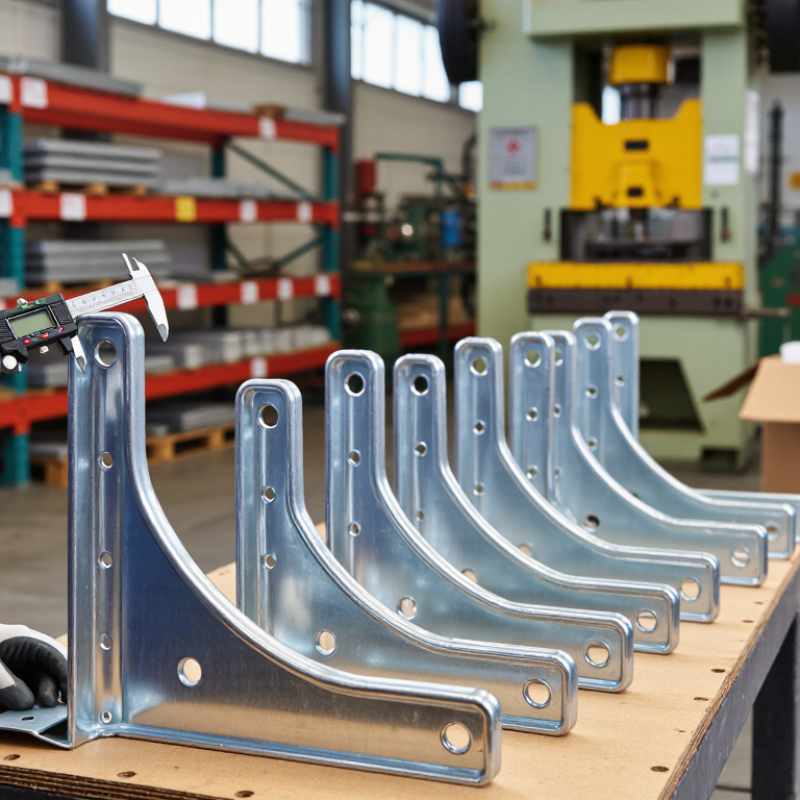
This guide examines manufacturers through practical and technical criteria. These include production experience, material traceability, tooling capability, welding quality, dimensional inspection, and batch consistency. A reliable supplier should provide clear drawings, measurable tolerances, sample testing, and realistic lead times. Factory audits can also reveal important details, such as organized material storage, calibrated gauges, and workers checking brackets before packing. Ask for evidence.
The phrase “top manufacturer” should not be accepted without careful review. A large facility may still struggle with custom specifications. A smaller factory may offer stronger communication and better control for specialized orders. That distinction is easy to miss. It deserves attention.
We will also consider export experience, packaging protection, documentation, and after-sales responsiveness. These factors become visible when a shipment arrives with scratched coatings or mixed fastener sizes. No supplier is perfect. Even experienced buyers can overlook a weak inspection plan or unclear responsibility for tooling changes. Therefore, this overview aims to support a balanced decision, not promote one company without verification. By comparing documented capabilities with actual samples, buyers can identify a garage door bracket manufacturer that fits their load requirements, quality expectations, and long-term supply plans.
Garage Door Bracket Functions and Load Requirements Under ANSI/DASMA 102
Garage Door Bracket Functions and Load Requirements Under ANSI/DASMA 102
Garage door brackets connect the door sections, rollers, hinges, tracks, and lifting hardware. They transfer door weight into the track and supporting structure. A weak bracket can distort the track, increase roller friction, or release the cable during movement. That failure may begin with a small bend near one fastener.
ANSI/DASMA 102 treats the garage door as a complete operating assembly. Therefore, a bracket should not be selected by appearance alone. Its capacity must match the door’s weight, section design, track geometry, spring system, and expected operating forces. Wind pressure may also affect requirements, especially on larger or exposed doors. The standard does not make every bracket interchangeable.
Load checks should include vertical door weight, roller reactions, hinge forces, cable tension, and local fastener loads. The mounting surface matters too. Thin sheet metal, masonry, and structural steel require different fastening methods. Field installers should confirm hole spacing, material thickness, corrosion protection, and manufacturer test documentation.
Small details matter.
In practical inspections, bent brackets often reveal poor alignment rather than excessive door weight. A door may move, but still load one side unevenly. That condition deserves attention before replacement parts are approved. Qualified manufacturers should provide traceable specifications, installation instructions, and evidence that the bracket works within the tested door assembly. Yet documentation is not enough. Real installations need careful measuring, controlled fastening, and periodic inspection.
China’s Top Manufacturers Ranked by ISO 9001, Capacity, and Export Data
China Top Garage Door Bracket Manufacturers?
China’s Top Manufacturers Ranked by ISO 9001, Capacity, and Export Data
A reliable ranking should begin with evidence, not factory photography. ISO 9001 certification shows controlled processes, but it does not prove every bracket is perfect. Audit the certificate scope, renewal date, and production site. Ask for batch records, coating specifications, load-test reports, and corrective-action logs.
Capacity separates stable suppliers from seasonal workshops. Look for stamping presses, progressive dies, automated plating, and spare tooling. A practical review should compare monthly output with actual delivery records. Large capacity can still hide bottlenecks. Measure lead times during peak construction months, when promises often become optimistic.
Export data adds another useful filter. Review shipment frequency, destination diversity, customs descriptions, and repeat orders. Consistent exports suggest documentation discipline and customer acceptance. They do not replace product testing. Rank suppliers by verified ISO status, audited capacity, and multi-year export performance. Use weighted scores rather than vague claims. Quality systems may receive 40 percent, capacity 30 percent, and export evidence 30 percent. This method feels objective, yet the weights remain debatable. A small specialist may outperform a larger producer on dimensional accuracy. Inspect samples from different batches, not one polished box. Ask difficult questions. Good answers should include measurements, dates, and responsible personnel.
China Top Garage Door Bracket Manufacturers? - China’s Top Manufacturers Ranked by ISO 9001, Capacity, and Export Data
Anonymized supplier benchmark for garage door bracket manufacturing in China
| Rank |
Anonymous Manufacturer Profile |
ISO 9001 Status |
Estimated Annual Bracket Capacity |
Export Experience |
Primary Product Capability |
Quality-Control Scope |
Composite Score |
| 1 |
Manufacturer Profile A |
Certified |
1.5–2.0 million pieces |
10+ years; 30+ export markets |
Stamped and formed steel brackets |
Incoming, in-process, dimensional, and final inspection |
91/100 |
| 2 |
Manufacturer Profile B |
Certified |
1.0–1.5 million pieces |
8+ years; 20+ export markets |
Heavy-duty brackets and mounting plates |
Material traceability, load testing, and final inspection |
87/100 |
| 3 |
Manufacturer Profile C |
Certified |
800,000–1.2 million pieces |
7+ years; 18+ export markets |
Galvanized and powder-coated steel components |
Coating inspection, gauge checks, and sampling inspection |
84/100 |
| 4 |
Manufacturer Profile D |
Certified |
600,000–900,000 pieces |
6+ years; 15+ export markets |
Standard residential garage door brackets |
Dimensional inspection and batch-level final inspection |
80/100 |
| 5 |
Manufacturer Profile E |
Verification Required |
400,000–700,000 pieces |
5+ years; 10+ export markets |
Custom stamped brackets and small assemblies |
Supplier declarations and customer-approved inspection plans |
75/100 |
| 6 |
Manufacturer Profile F |
Verification Required |
250,000–500,000 pieces |
3+ years; 8+ export markets |
Light-duty brackets and replacement parts |
Visual, dimensional, and pre-shipment inspection |
69/100 |
Ranking methodology: ISO 9001 evidence, stated production capacity, export-market experience, product range, and quality-control coverage. Capacity and export figures should be validated through current certificates, factory audits, production records, and shipment documentation before procurement.
Bracket Materials Compared: ASTM A36 Steel and 400 MPa Tensile Strength
China Top Garage Door Bracket Manufacturers?
Bracket Materials Compared: ASTM A36 Steel and 400 MPa Tensile Strength
When evaluating garage door bracket manufacturers in China, material data deserves close attention. ASTM A36 steel remains common because it offers dependable weldability and consistent forming performance. Its specified tensile range is typically 400–550 MPa, while its minimum yield strength is about 250 MPa. This difference matters. Tensile strength describes breaking resistance, not working capacity.
A bracket made from steel with 400 MPa tensile strength may handle ordinary loads effectively when properly designed. However, thickness, hole geometry, weld quality, and mounting conditions also control performance.
During practical inspections, I check for clean bends, even edges, and secure weld beads. A strong material can still fail around a sharp hole or poorly fitted fastener.
That assumption fails.
ASTM A36 is often easier to machine and weld, which can support stable production costs. Higher-strength steel may reduce weight, but it can require tighter forming controls and better process monitoring.
Corrosion protection deserves equal attention, especially in humid garages. Ask manufacturers for mill certificates, coating specifications, dimensional reports, and load-test records.
Compare the tested load with the expected door force, including repeated cycling. A higher tensile number is not automatically better.
In my view, reliable brackets balance strength, ductility, fabrication quality, and traceable inspection.
Some specifications look complete, yet omit fatigue testing. That gap deserves honest review.
Factory Quality Control: Gauge Tolerances, Load Testing, and Defect Rates
China Top Garage Door Bracket Manufacturers?
Factory quality control reveals more than polished catalogs. During supplier audits, inspectors should verify gauge tolerances on every critical bracket dimension. Hole spacing, mounting angles, and steel thickness need documented limits, not verbal promises. A calibrated digital gauge can detect a 0.2 mm shift before installation problems appear. Small errors matter.
Reliable factories record calibration dates and keep master samples beside production lines. Operators compare stamped parts against these references during shift changes. Engineers should also inspect burrs, cracks, uneven bends, and coating coverage. These details affect fitting, corrosion resistance, and long-term safety. However, visual checks alone are insufficient.
Load testing should reflect real installation forces, including repeated opening cycles and uneven loading. Test reports should state the fixture, load value, duration, and failure point. A bracket passing one static test may still weaken under repeated stress. Defect rates deserve equal attention. Ask whether the reported rate covers final inspection, customer returns, or only sampled units. That distinction can change the meaning completely.
Factories with strong traceability link each batch to material certificates, machine settings, inspectors, and corrective actions. Still, no production line is perfect. I have seen acceptable tolerance records hide inconsistent measurement methods. Suppliers should review failed samples openly and adjust tooling when patterns appear. Honest data is more useful than an impressive percentage.
China Garage Door Bracket Factory Quality Control Benchmarks
Reference indicators for dimensional gauge control, load validation, and production defect prevention. Values are non-brand-specific manufacturing benchmarks.
The benchmark assumes a dimensional tolerance of ±0.05 mm for critical bracket features, a proof-load test at 1.5 times the rated working load, and a low first-pass defect rate based on controlled stamping, forming, welding, and inspection processes.
Supplier Verification: Certifications, MOQ, Lead Time, and OEM Capability
Choosing China’s top garage door bracket manufacturers requires more than comparing catalog photos. A reliable supplier should provide current certifications, testing records, and clear product specifications. Check whether certificates cover the actual factory and bracket material. A copied PDF proves little. Ask for the certificate number, issuing body, and renewal date. Factory audits, material reports, and inspection photos add stronger evidence.
MOQ can change with steel thickness, surface treatment, packaging, and tooling. Request separate MOQs for standard brackets and custom designs. Lead time should be divided into sampling, production, inspection, and shipping. A supplier promising ten days may exclude tooling or port delays. I have seen schedules fail because these details stayed unwritten. That weakness deserves attention, not excuses.
Tips:
Send a measured drawing with hole spacing, load requirements, coating preferences, and packaging needs. Ask for an OEM sample before approving mass production. Confirm who owns the tooling and CAD files. Require a written inspection plan, including dimensions, weld quality, coating thickness, and carton strength. A video call can show production, but it cannot replace independent verification. Small gaps remain possible. Review them before payment and keep every agreement in writing.